
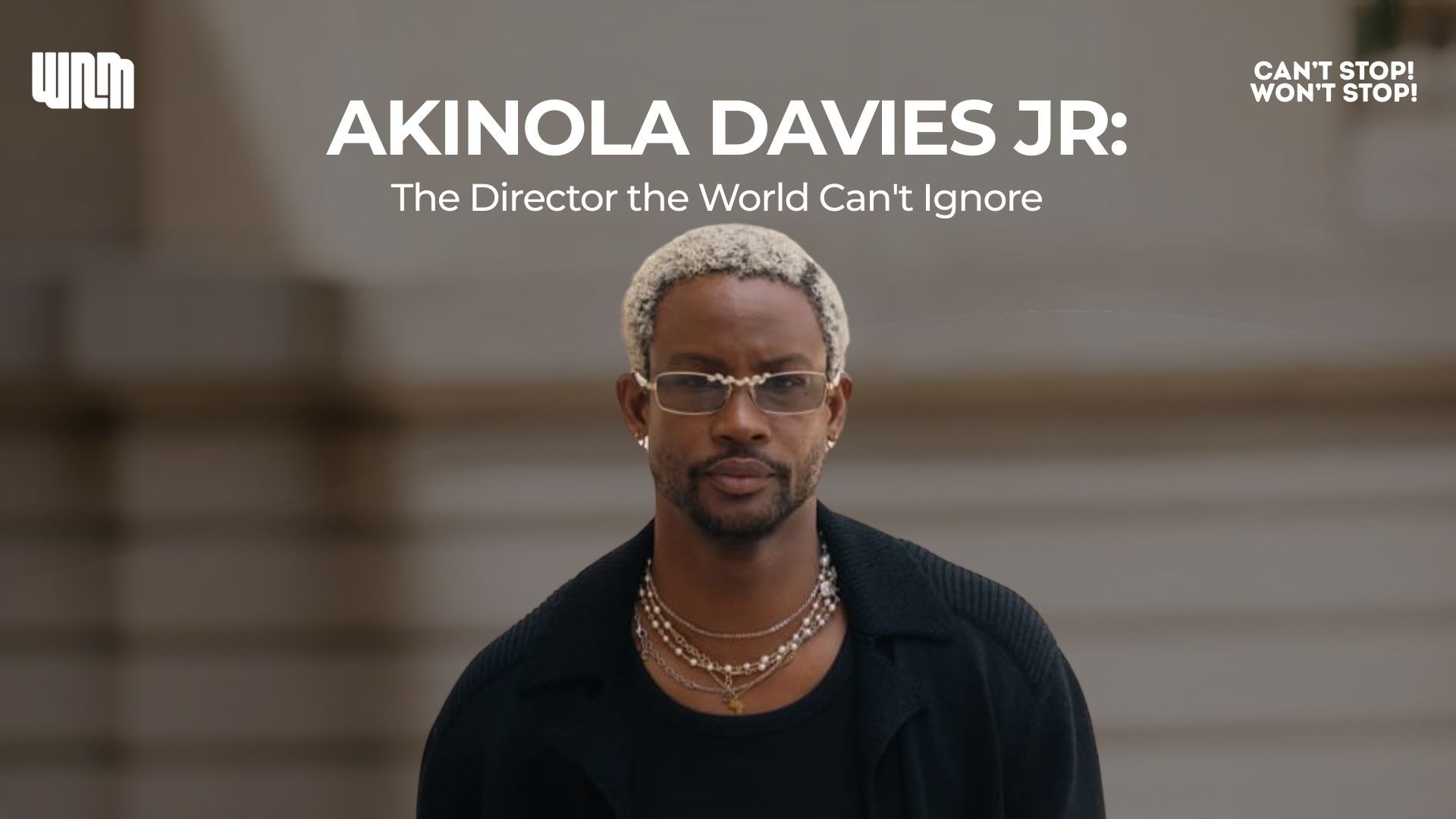
Akinola Davies Jr. is one of the most refreshing forces shaping global cinema right now. In a landscape where storytelling often leans loud and hurried, he chooses depth, memory, and intention. His work carries a quiet confidence, the kind that doesn’t ask to be noticed but becomes impossible to ignore.

His debut feature, My Father’s Shadow, proved that. The film made history as the first Nigerian title selected for the official lineup at the Cannes Film Festival, earning a Caméra d’Or Special Mention. Set in 1993 Lagos and inspired by personal family history, it’s a film that feels both intimate and nationally significant. Akinola wasn’t just making a movie; he was preserving a moment.
What makes his rise even more compelling is the craftsmanship. Akinola shot the film on celluloid, insisted on a deeply collaborative set, and centred Nigerian actors and crew in a way that honoured the world he was depicting. The result is a time capsule: textured, emotional, and unmistakably Nigerian. His Best Director win at the British Independent Film Awards cemented what everyone already felt: a new voice has arrived.

But Akinola isn’t treating success as a spotlight; he sees it as a responsibility. His next project is already in motion, exploring the Niger Delta through themes of identity, history, and generational impact. He’s not chasing trends — he’s building a body of work that expands how Nigerian stories are told and who gets to tell them.
Akinola Davies Jr. represents a shift: Nigerian filmmaking that is bold but grounded, emotional but precise, local and global at the same time. He’s not slowing down, he’s not playing safe, and he’s not repeating anything that’s been done before. Simply put — he can’t stop, and he won’t stop.
Discover Akinola Davies Jr.:
Instagram: @akinoladaviesjr
By signing up to the WNM monthly newsletter you agree to receive electronic communications from WNM that may sometimes include advertisements or sponsored content.